
Open plan offices are often pitched as collaborative zones, but in reality, they are wide open spaces for every click, message ding and team meeting to travel without disruption. As teams have evolved and work modes have multiplied, hoping that noise-cancelling headphones will do the trick is a lie everyone needs to stop telling themselves.
The good news is offices don’t need a renovation – they need a rethink of how to transform open spaces into flexible, shape-shifting zones that support how people actually work. At func. we believe that workspaces should behave like agile teams: adaptable, responsive and ready to shift gears without needing reconstruction. That is where func.’s movable and acoustically effective office partitions come into play, creating versatile zones without renovation.
The Modern Office Problem: Teams Have Changed, but the Space Hasn’t
With the mix of hybrid work models and video calls paired with bursts of collaboration throughout the day, today’s workday no longer suits the traditional office layout. Employees need spaces where they can collaborate, but also quiet zones they can retreat to.
According to Gensler, 65% of workers prefer a workplace with both open and private spaces. Explore Workspace reported 75% of employees dislike open-plan offices due to privacy issues. Not to mention, Weforum found it can affect productivity by up to 66%.
The mismatch is clear. To future-proof workspaces, employers need to strike a balance between connection and privacy so that productivity can thrive. Renovations cost $150-$250 per square foot, plus requiring permits, downtime, and weeks of dust. Alternatively, zoning offers a flexible office layout solution with minimal setup, creating collaborative hubs and quiet corners to support all different work styles.
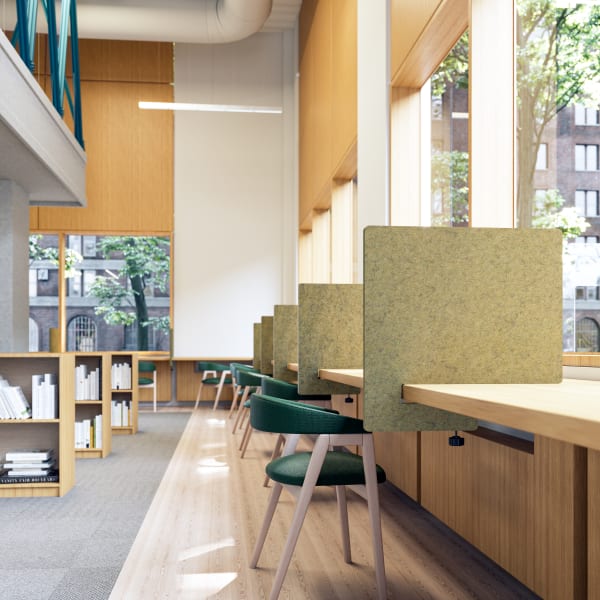


What an Agile Workspace Actually Means
An agile workspace is a living ecosystem that offers employees flexible workspaces that adapt to their needs at a moment's notice.
Agile workspaces are defined by:
Adaptive spaces that transition from collaborative mornings to quiet afternoons.
Layouts that support team growth and changes.
Modular design that supports meetings, calls, social interactions, and deep focus.
While traditional walls lock a layout in place, office partitions work as modular systems designed to move, adapt and evolve without downtime or construction.
How Office Partitions Enable Agile Workspaces Without Renovations
Think of freestanding office partitions as flexible office layout solutions that can move and transform zones into agile workspaces without having to drill a single hole. Here is how different types of office partitions can support flexibility, privacy, acoustics, and save costs:
1. Mobile Freestanding Dividers
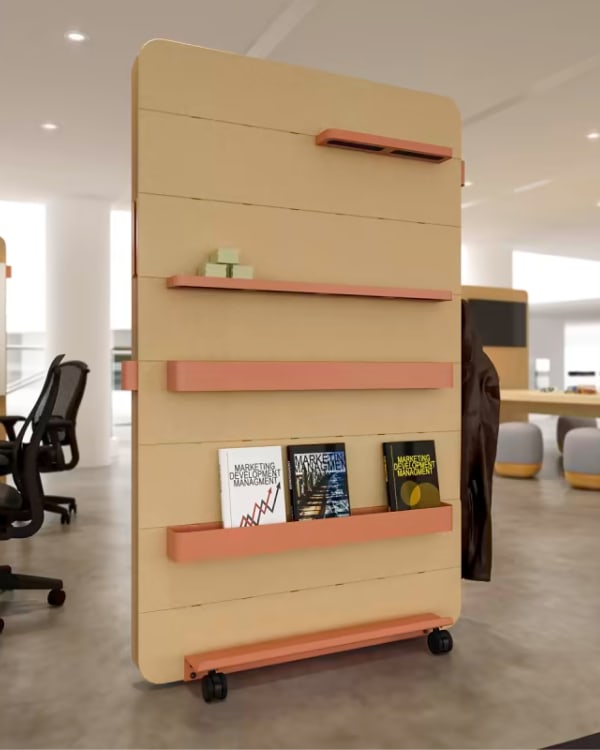
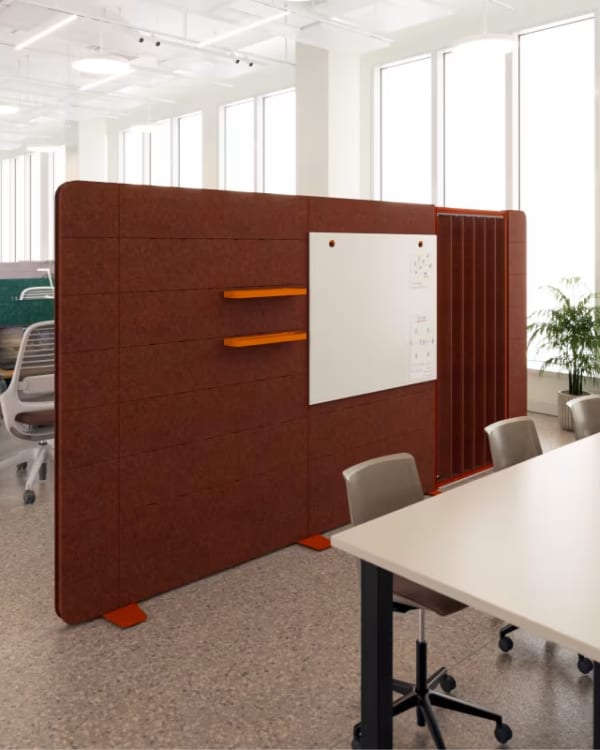
Mobile partitions act as the shape shifters of the office. They can be easily moved and readjusted to suit the user's needs. func.’s freestanding partition walls and portable office walls are engineered to be lightweight, movable and acoustically effective, making them the ideal choice for offices with hybrid working models.
Best for:
Pop-up collaboration areas
Temporary quiet zones
Breaking up open-plan offices into clearly defined work zones
Hybrid teams with daily fluctuations
Benefits:
High flexibility — easily adjusted by one person
No permits, no tools
PET felt surfaces add acoustic absorption
Lightweight but durable
2. Movable Walls
Movable walls are the next best thing to constructing new rooms, without having to build anything. They are easy to install, engineered for long-term use and are acoustically superior. func.’s freestanding partition walls and temporary office walls are built for teams that constantly change direction but don’t want to rebuild the office every quarter.
Best for:
Creating new meeting rooms
Private offices that don’t require permanent construction
Teams that grow, shrink, or shift structure often
Benefits:
Higher acoustic performance compared to lightweight screens
Fast installation
Built for long-term reuse
Can be relocated when teams reorganize
3. Acoustic Pods and Booths
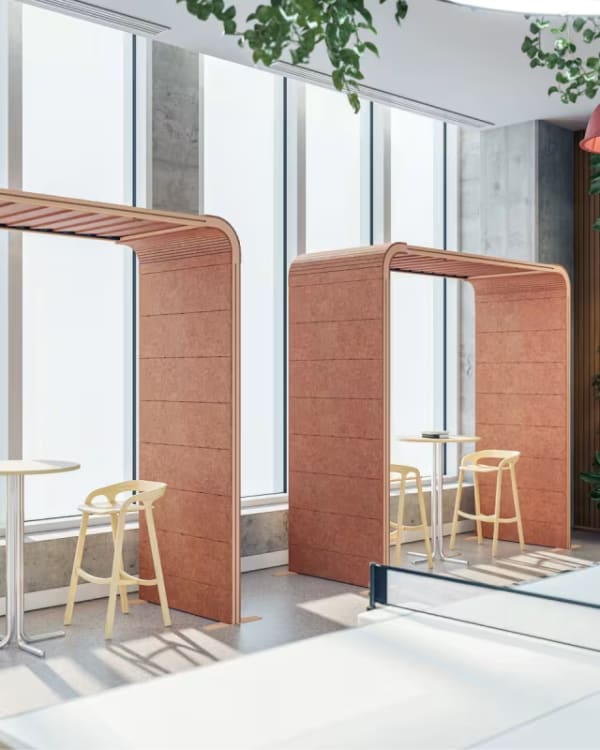
Acoustic pods and booths are the ideal plug-and-play private rooms that don’t require any construction. func.’s office booths and pods arrive pre-fabricated, are easy to set up, and can move with you if your layout changes.
Best for:
Video calls
Deep-focus work
Sensitive conversations
Noise-sensitive teams
Benefits:
Background noise isolation
Integrated power and ventilation
Movable if the office layout changes
4. Desk Screens and Half-Height Panels
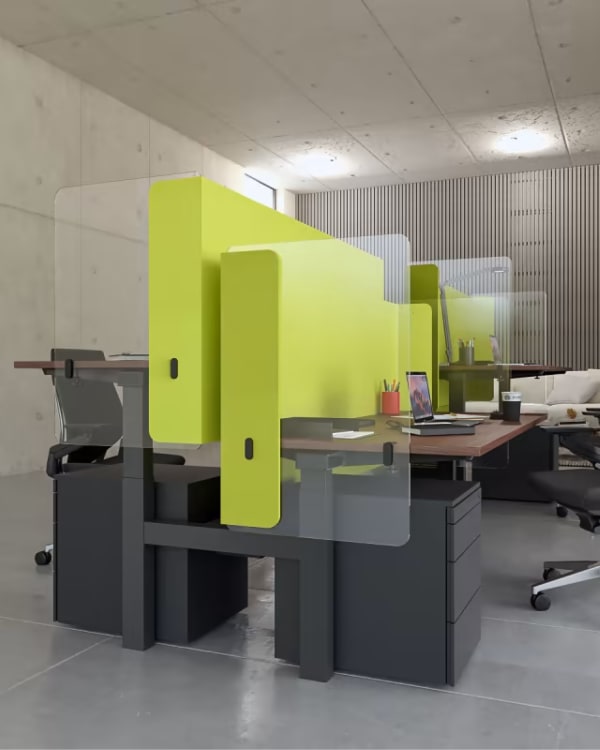
For added focus, desk screens and half-height panels offer micro focus zones and separation. func.’s Murri desking screen's acrylic side panels help reduce noise and add focus zones without blocking light.
Best for:
Shared benching systems
Reducing visual and conversational distraction
Budget-friendly privacy layers
Benefits:
Simple, fast install
Acoustic absorption
Semi-privacy without closing off the office
5. Shelving and Planter Dividers
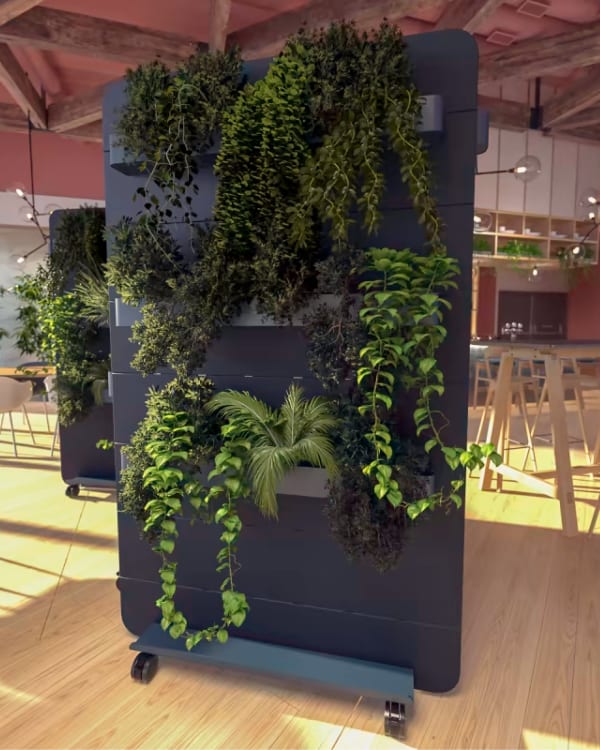
Shelving and partition dividers bring a touch of greenery and serene zones to open-plan offices, creating natural and organic boundaries that soften spaces and bring mental calmness. Adding plants into offices not only improves indoor air quality but also supports mental well-being – reducing stress and boosting focus. func.’s Cooee Biophilia Pack brings acoustic absorption, visual softness, and a home for indoor plants, making each zone feel intentional and distinct.
Best for:
Separating walkways from work zones
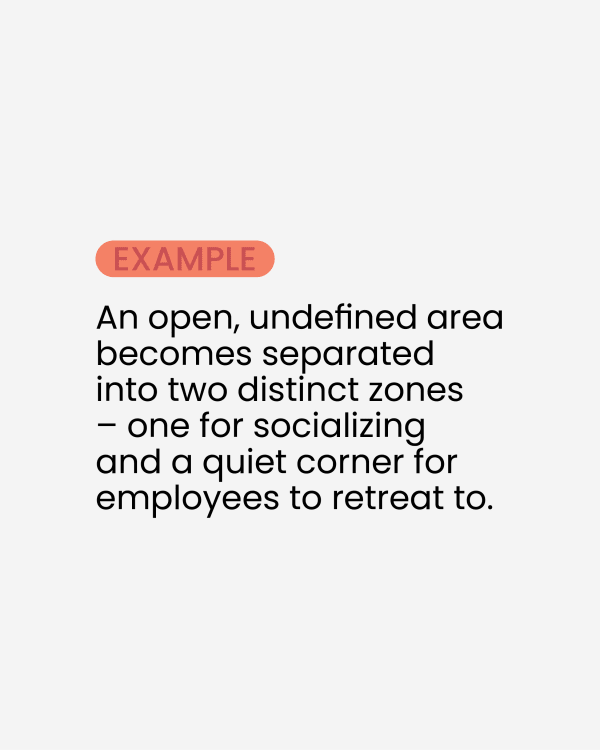
Defining quiet zones from collaborative areas
Creating organic boundaries
Benefits:
Dual-purpose (storage or zoning)
Supports biophilic design
Adds character while shaping flow
Enhances focus, calm and mental wellbeing
Improves air quality and freshness
Key Benefits of Zoning Without Renovating
Benefit 1: Noise Reduction
Open plan offices are echo chambers that affect concentration and productivity by up to 66%. Office partitions create acoustic and visual layers, helping to absorb sound, reduce reverberation and support focus.
Benefit 2: Privacy Without Losing Transparency
Compared to traditional office walls, modular designs such as func.’s movable walls, screens, and partitions create dynamic and flexible private zones without turning the office into a maze.
Benefit 3: Collaboration Zones That Don’t Disturb Everyone Else
Team collaborations no longer need to feel hushed – office partitions help contain sound without disturbing others. func.’s Cooee Collaboration Wall and Presentation Wall further aid collaboration by actively supporting brainstorming and teamwork with pin-up surfaces, writable spaces and acoustic backing – keeping conversations clear and contained.
Benefit 4: Fast Reconfiguration
Unlike traditional office walls, modular systems are designed for fast reconfiguration, keeping workspaces agile and adaptive.


Benefit 5: Lower Cost and Longer-Term Value
If offices need to relocate, traditional walls can’t be transferred. If an office relocates or evolves, the built-in construction, particularly the branding or colors, is costly to remove and isn’t reusable. Modular furniture retains value as it costs less, can be repurposed and can often be treated as depreciable furniture instead of construction expenses.
Benefit 6: Minimal Disruption
With flexible furniture, there is no dust, no noise, and minimal setup required – keeping business running while spaces are transformed around them.
Benefit 7: Aesthetic and Brand Customization (func.’s design-forward approach)
func.’s catalog of modular office screens, partitions and dividers brings more than acoustic performance and flexible solutions to a workspace. With a wide range of colors, custom print options and finishes, every element can be tailored to suit a brand’s identity – whether it is calm and considered or bold and expressive.
These design choices create visually engaging, practical hubs designed to support both collaboration and privacy – while reinforcing brand presence throughout the space.
Benefit 8: Sustainable and Future-Proof (func.’s modular lifecycle)
What sets flexible and modular furniture apart from traditional office walls is that they are adaptive to businesses' changing needs. Instead of being built once and discarded, modular zoning solutions can be relocated, reconfigured and reused as teams grow and evolve – future-proofing workspaces to meet the demands of evolving teams.
Designed with circularity and extended lifecycling in mind, func.’s modular partitions support future-ready workspaces by remaining agile and adaptable– minimizing demolition, lowering material turnover and costs.
How to Implement Agile Zoning in Your Office
Ready to get started? Here is our six-step guide to implementing agile office design through zoning:
Step 1 — Audit Your Space & Problems
Conduct an audit of your space by walking through the floor, identifying:
Noise hotspots
Congestion points
Underutilized corners
Taking note of employee complaints (“It’s too loud,” “No private call space”)
Step 2 — Identify Work Modes to Support
Next, identify what work modes your office needs to support.
Most offices need:
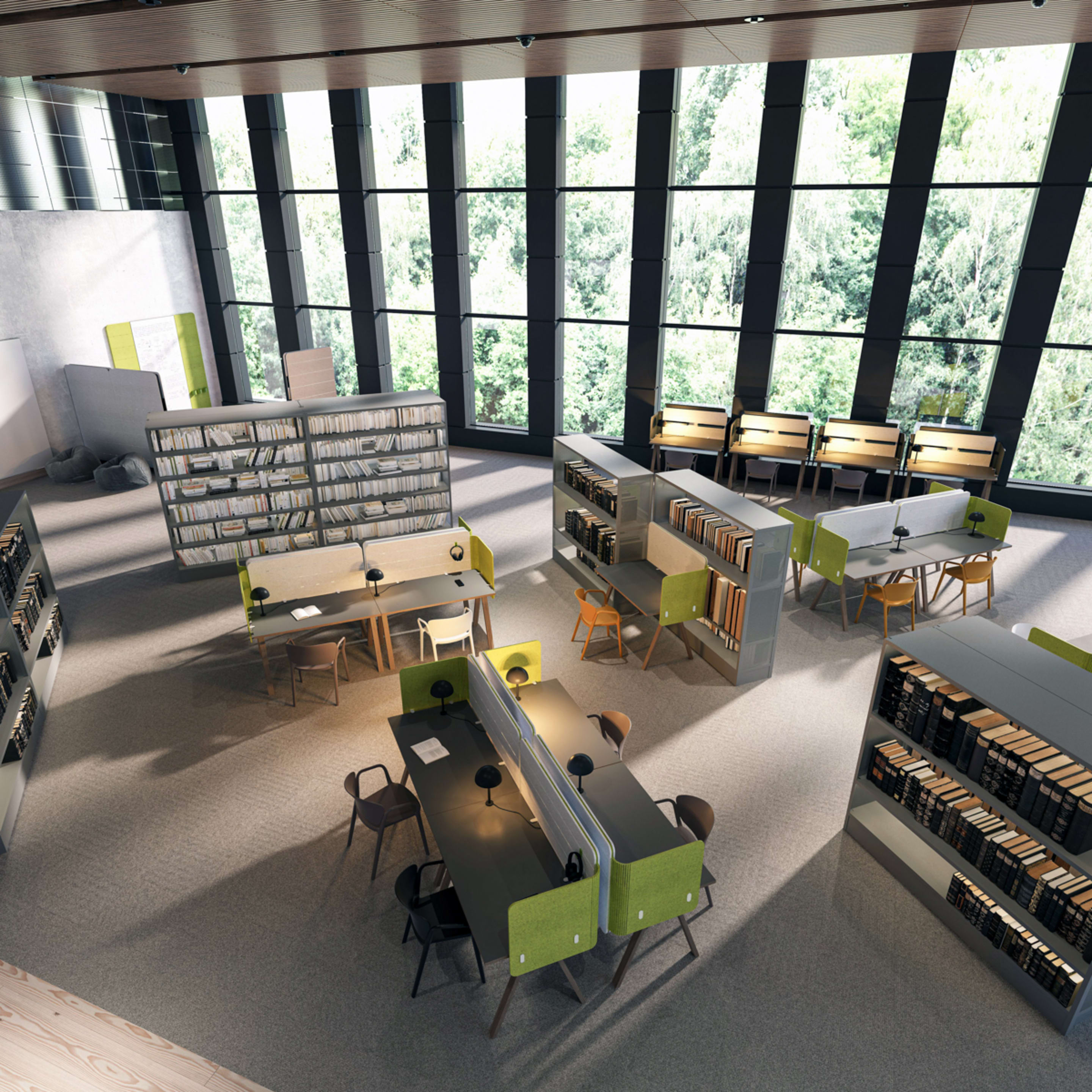
Focus space
Collaboration zones
Social/landing spaces
Private call areas
Project-specific rooms
Hybrid zones for socializing or quiet retreat
Step 3 — Match Partition Types to Needs
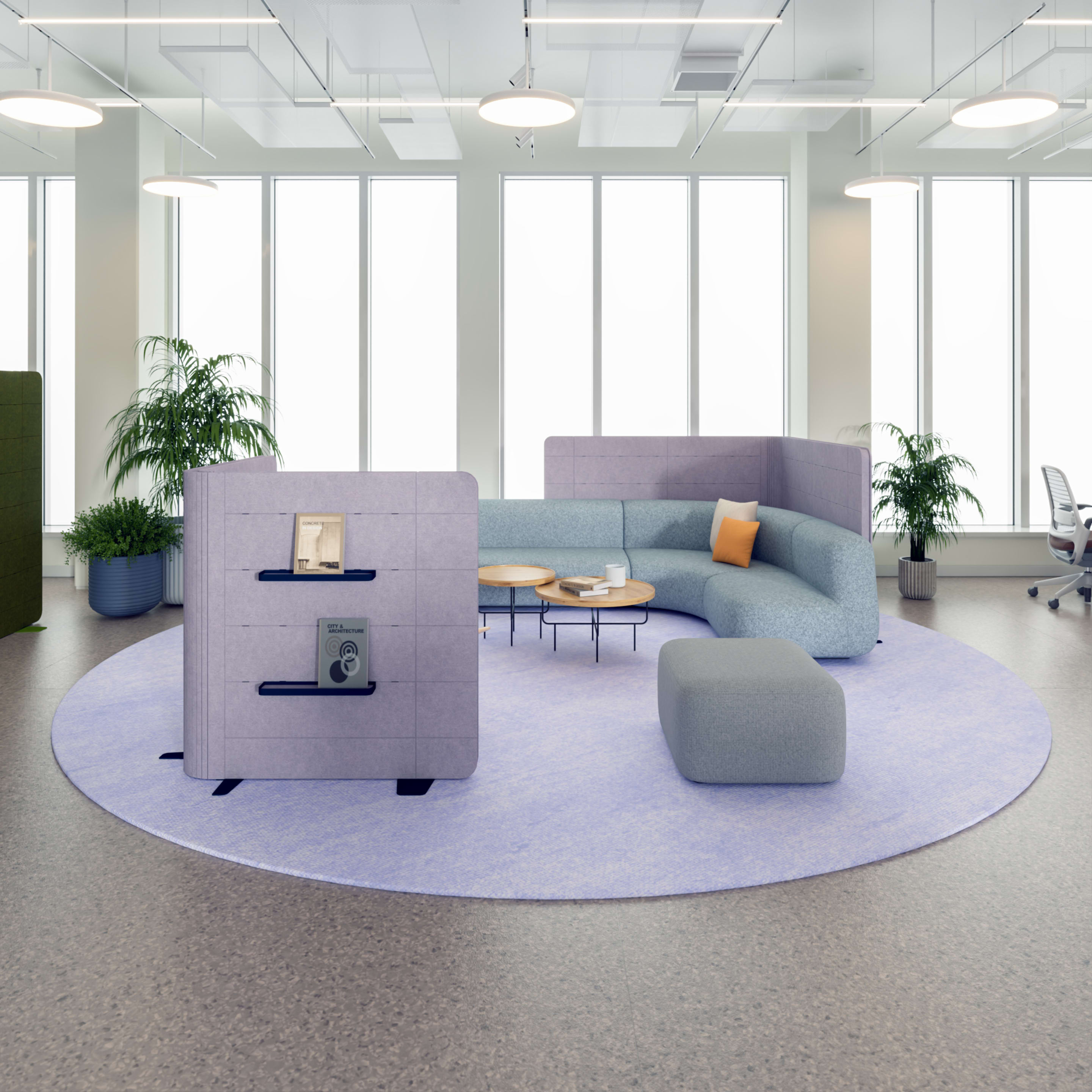
Depending on the specific need at hand, match the office partition. func.’s wide range of movable walls, screens and pods are designed to meet every work mode.
For example:
Quiet zone → acoustic pods
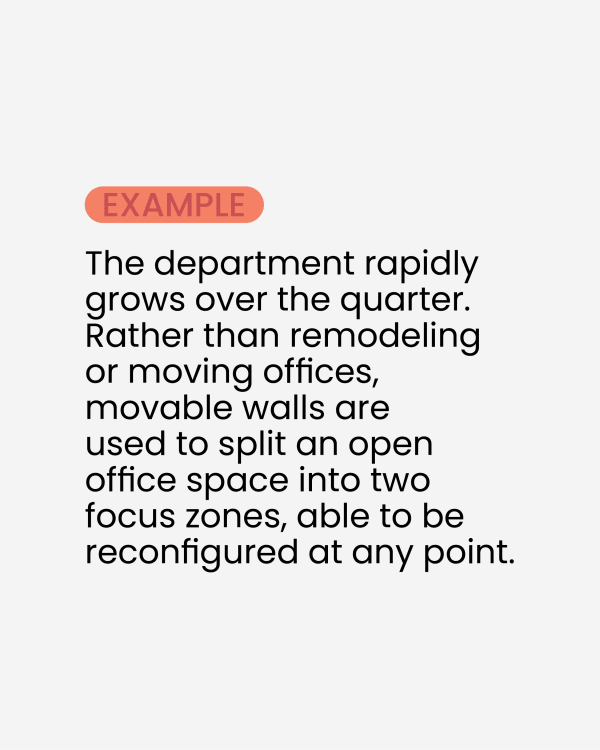
Department boundary or zone separation → shelving or planter dividers
Pop-up collaboration → mobile partitions
Meeting room → movable walls
Step 4 — Plan Flow, Light, & Acoustics
The biophilia integration into office spaces is important for creating a natural flow and encouraging productivity and inspiration.
Here are our top tips:
Keep walkways open
Don’t block natural light unless needed
Layer acoustics (pods + screens + soft surfaces)
Maintain visibility where appropriate
Step 5 — Pilot One Zone First
Start small and build your design from there – this ensures feedback is taken on board and the plan is adjusted before scaling.
Step 6 — Scale Across the Office
Based on the success of the pilot zones, expand the plan to create an agile workspace that supports all employees and work modes.
Conclusion: Your Office Doesn’t Need Renovation—It Needs Reinvention
Workplaces don’t need full renovations to solve modern challenges — they need smarter, more flexible ways to support how people actually work.
Agile spaces are modular, movable and designed for real human behavior. With func.’s innovative office partition solutions, your workspace becomes future-ready and designed for true agility.
Ready to rethink your space without compromising on costs?
Let's create some func.