
Open-plan offices promised collaboration and delivered something else entirely — a landscape where every keyboard click, notification ping and weekend recap travels freely across the floor, and the only solution anyone offers is a pair of noise-cancelling headphones.
According to workplace research from the Center for the Built Environment, lack of speech privacy and conversational distraction are the leading drivers of office dissatisfaction. People usually aren't annoyed by the general volume; they are distracted because they can perfectly understand what their coworker is saying three desks over.
To salvage focus, you don't need a sledgehammer or a $200-per-square-foot construction bill. You need tactical office zoning. The real question for facility managers and workplace specifiers is: when looking at Desk Dividers vs Floor Partitions, which option actually delivers the noise reduction your team is begging for?
How Desk Dividers and Floor Partitions Affect Acoustic Control Differently
Before you add a single panel to your cart, it is critical to understand that acoustic control is about controlling pathways. You cannot completely soundproof an open office with furniture, but you can dramatically alter how sound travels.
Workstation-Level Control: This intercepts sound immediately at the source. It prevents the sound of a voice from traveling directly into the neighbor’s monitor.
Space-Level Control: This focuses on sound attenuation across a larger distance. It breaks up the room's geometry so that the sales team's cold calls don't ruin the engineering team's deep-focus sprint.
By choosing the right tool for the specific office environment issue, you ensure your acoustic investment actually moves the needle on productivity.
When Desk Dividers Are the Better Choice
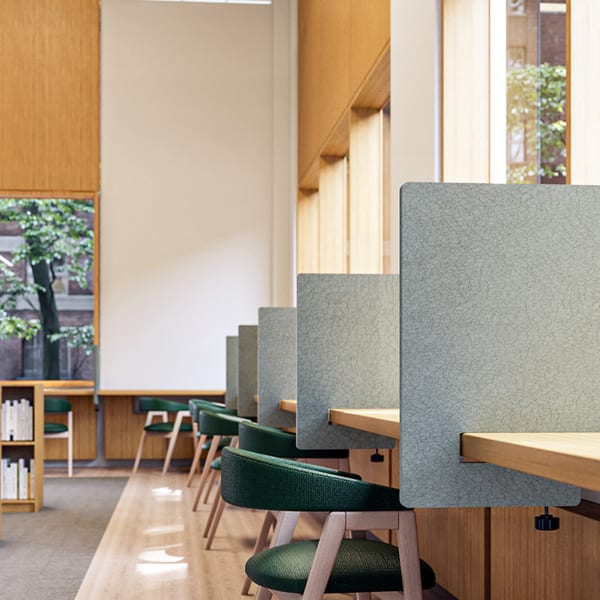
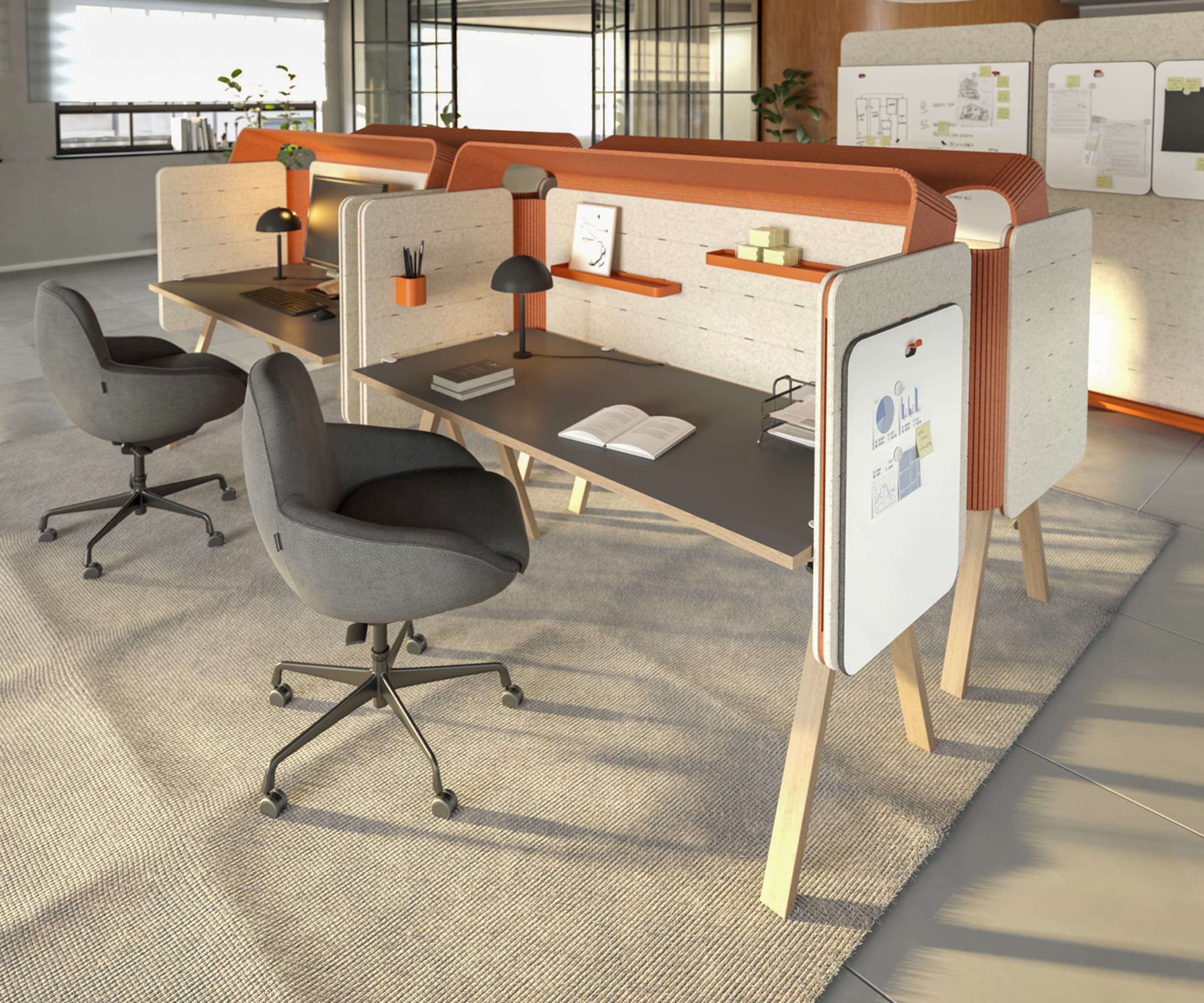
If your primary issue is that sitting at a shared benching system feels like sharing a megaphone with a desk mate, desk dividers are your first line of defense.
A premium desk partition or desk screen acts as a localized acoustic shield. When specified with high-absorption PET felt - like our workstation dividers - they absorb immediate vocal energy before it can bounce off hard desk substrates and glass windows.
Ideal Use Cases:
High-density benching and shared desks: Perfect for call-heavy roles where employees sit face-to-face.
Workstation privacy: Provides instant visual privacy and cuts down on peripheral distractions.
Tighter budgets and fast turnarounds: They are incredibly easy to install and clamp directly to existing furniture without modifying the floor layout.
The Catch: A desk partition is a starting point, not a complete solution. It keeps a nearby whisper from becoming a distraction, but it won’t stop sound from floating over the top of the desk and traveling down the hallway.
When Floor Partitions Are the Better Choice
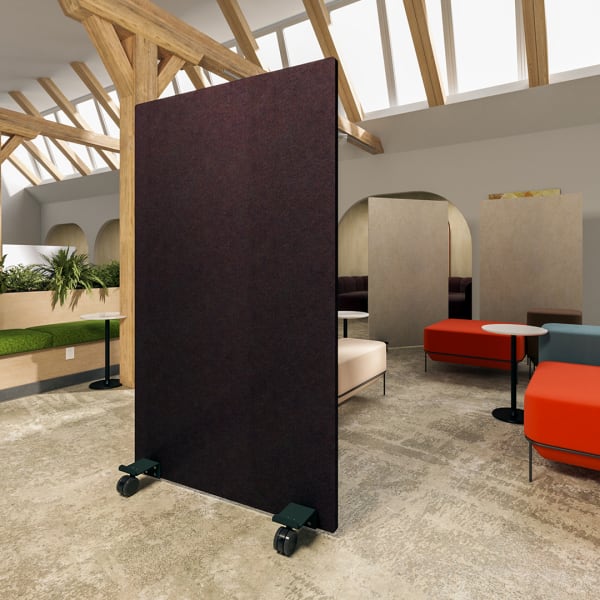
When your acoustic problem is spatial rather than personal, it’s time to look at floor partitions. If you need to stop conversational noise from drifting between entire departments or circulation paths, a desk-level screen isn't tall enough to interrupt that sound path.
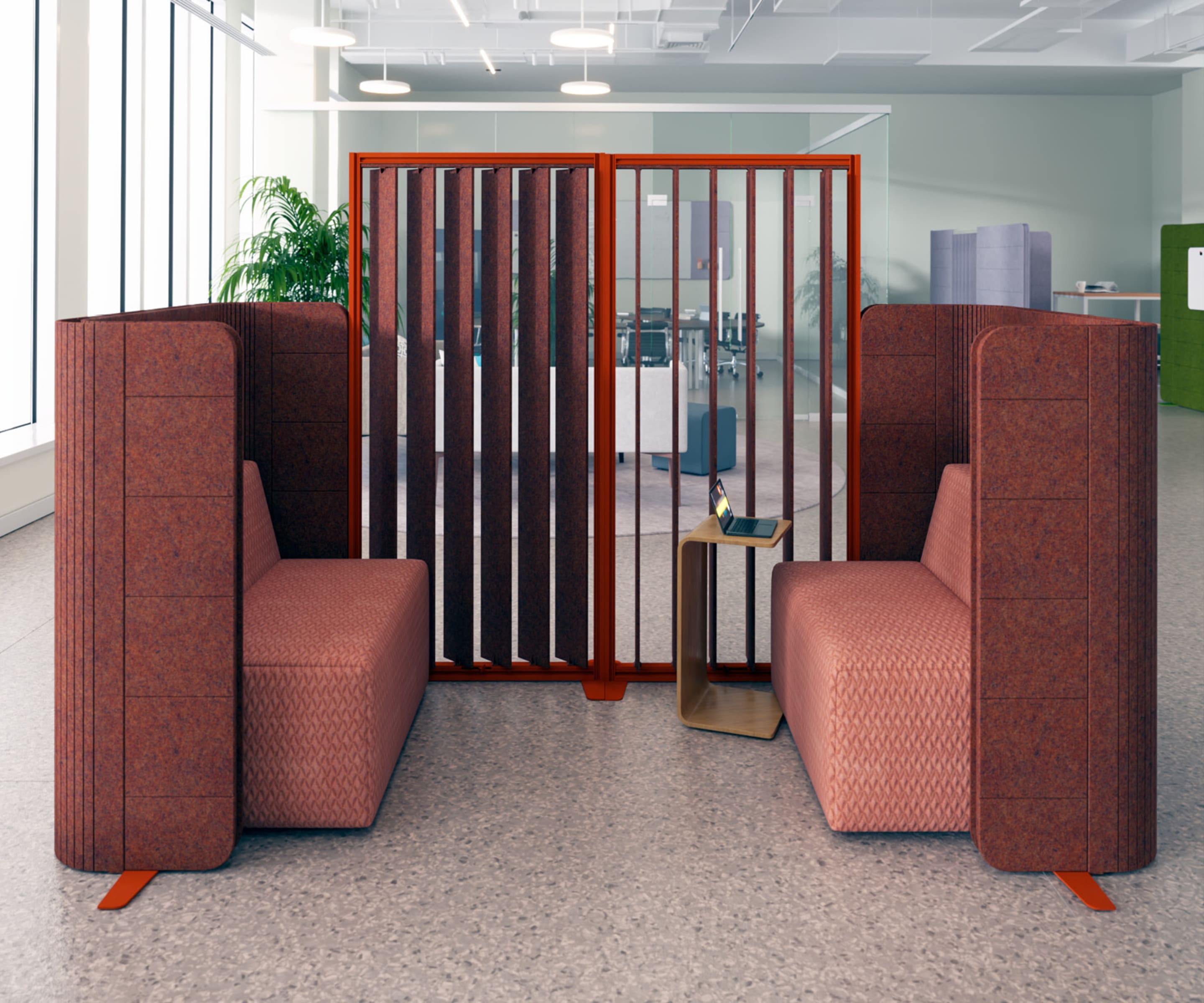
Freestanding office partitions and modular office partitions act as structural baffling. By placing a freestanding partition wall between a collaborative lounge and a row of focus desks, you block line-of-sight sound waves and force them to wrap around a massive absorber, significantly decaying the volume.
Ideal Use Cases:
Open plan offices requiring clear zoning: Separating active walkways, kitchens, or printer areas from quiet heads-down desks.
Flexible office space layouts: Offices that experience seasonal head-count shifts or hybrid team fluctuations.
Multi-use environments: Creating a temporary pop-up meeting zone without pulling a single building permit.
Our freestanding office partitions allow you to execute macro-level office zoning with absolute design freedom, giving you the acoustic benefits of a drywall installation with none of the permanent commitments.
Which Option Works Best for Different Space Types and Budgets?

What Desk Dividers and Floor Partitions Can’t Do on Their Own
Let's maintain some specifier-grade honesty: neither option is a magic wand for total acoustic silence. Partitions are designed to reduce the radius of distraction and lower sound pressure levels, not replace a structural room.
If you require confidential speech privacy for HR meetings or executive boardrooms, portable partition screens alone won't get you there. Truly mastering open office acoustics requires a layered approach:
Acoustics: Absorbing energy via desk and floor screens.
Architecture: Hanging office dividers or baffles to catch vertical ceiling reflections.
Acoustical Masking: Implementing ambient sound masking (white noise systems) to raise the acoustic floor, making background conversations completely unintelligible over a distance.
Choosing the Right Fit for Focus, Privacy, and Flexibility
Acoustic retrofitting shouldn't mean turning your beautiful, sunlit office into a dark maze of 1990s cubicles.
If your team is suffering from immediate, desk-to-desk distraction, start with localized partition screens. If your entire layout feels chaotic and lacks clear boundaries, deploy structural freestanding office partitions to gain control over the space.
At func., we design modular space division systems that blend high-performance noise absorption with crisp, modern aesthetics. You can upgrade your office's acoustic comfort on a Friday afternoon and have a fully optimized, focus-ready workplace by Monday morning.
Ready to sketch out your new layout without breaking out the construction budget?