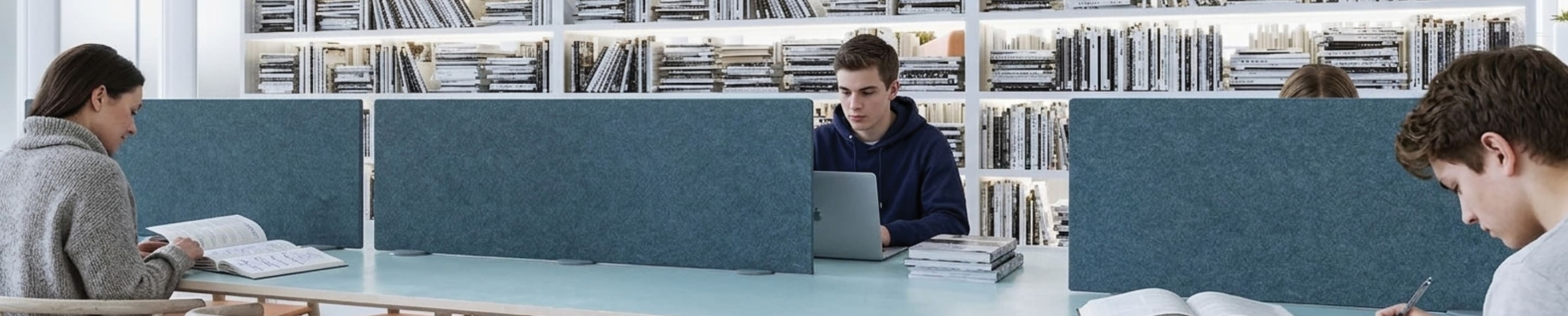
Environment matters. Long before teaching begins, classroom design plays a powerful role in shaping student interaction, focus and emotional regulation. Elements such as layout, spatial boundaries and even the shapes used within a room all play a role in how much students gain from their learning environment. In practical terms, this means the way a classroom is designed can influence student concentration and comfort.
According to cognitive load theory, clear zoning and predictable boundaries can prevent distractions and mental overload by making the space easier to navigate.
Hybrid classrooms have also become increasingly popular as education models continue to evolve. Where traditional designs often limit adaptability, environmental psychology suggests that the physical environment itself can be designed to better support more flexible learning spaces. This means these outcomes can be achieved through modular, product-based interventions rather than fixed architecture. This approach places designers and architects in a strong position to create future-ready learning environments that can be adapted as technology develops or teaching needs change.
Recent research from Bond University’s School of Psychology suggests architectural and biophilic design can influence heart rate and mood, while also enhancing creative output. Further, a Spanish study into the psychology of shapes in design found that room design can enhance memory and cognition. With classrooms becoming more dynamic and the need for inclusive learning environments continuing to grow, it’s never been a better time to shape spaces that help shape minds.
The Three Pillars: The Psychology of Shapes in Classroom Interior Design
At func, we see the psychology of shape as fundamental to how learning environments perform, and it directly guides how we design our modular products and systems across education and commercial spaces. We recognise that a classroom doesn’t simply contain learning - it actively shapes it. That’s why our approach focuses on three key pillars: using shape to support learning, creating spaces that foster a sense of belonging, and enabling flexibility to adapt to evolving teaching practices.
Shape-Driven Learning
With curved forms to soften classrooms and encourage connection and comfort, shapes can be a silent partner in the educational experience. By incorporating workstation dividers, you limit distractions and create clear learning zones for spatial definition and clarity, providing subtle behavioral cues before the class even begins.
Research has shown that curves are perceived positively, while sharp angles can trigger a threat response. When this research is applied to a classroom setting, designers can create defined zones: quiet areas for independent working and spaces for collaborative interactions.
We shape our products to support student learning, from curved workstation dividers that reduce visual distraction to acoustic screens that define quiet zones, and modular elements that support movement and collaboration. Matching the design with how students focus, connect and engage, means we’re helping to improve learning outcomes through more sustained participation.


Belonging Through Design
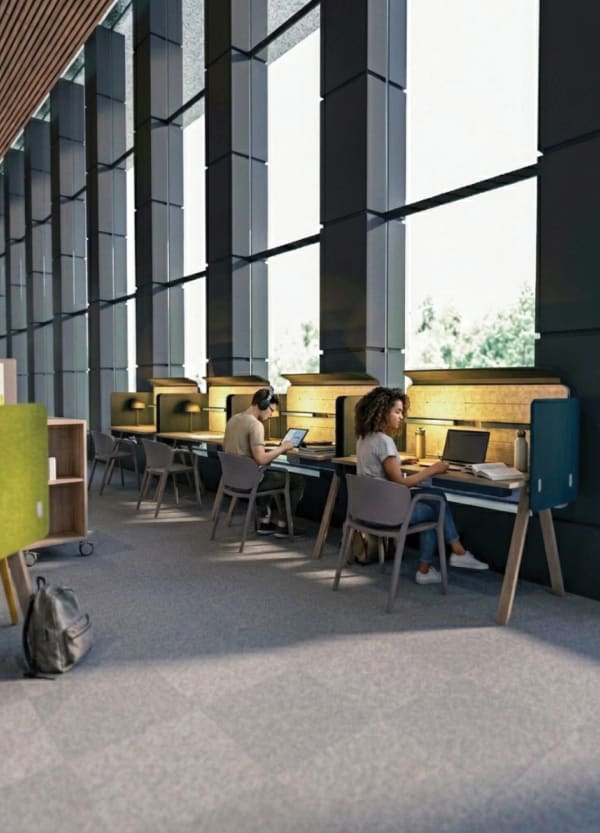
Designers looking to create equity should consider variation rather than uniformity, utilizing the Universal Design for Learning to ensure classrooms provide varied zones and postures, as well as levels of enclosure. As students regulate, focus and engage in different ways, learning environments must be designed to support a diverse range of learning behaviors. While some students require visual shelter for peak concentration, others thrive in a collaborative and open environment. Providing students with spatial choices increases both their engagement levels and autonomy. Belonging is fundamental to learning, and well-designed classrooms help create environments where students feel supported, recognized and able to engage.
This can be achieved through modular solutions such as semi-enclosed learning booths, acoustic pods and flexible partition systems that give students greater choice in how they engage with their environment. Rather than prescribing a single way of working, these elements allow spaces to support both focused, individual learning and open, collaborative interaction.
Importantly, creating this level of adaptability doesn’t require permanent structural change. Products like movable partitions and sound-optimized learning booths provide both visual and acoustic control, enabling more inclusive environments while maintaining flexibility for future needs.
Flexibility That Supports Teaching
Not only do teaching formats change throughout the day, but pedagogy also shifts and evolves. Learning environments that rely on fixed architectural layouts can make it harder to adapt to these changing needs.
Adapting to new teaching practices can often require major renovations, which may disrupt learning and strain already-tight budgets. Flexible design offers a more practical alternative, enabling schools to future-proof their environments and add long-term value without the need for major structural change.
This adaptability can be achieved through simple, modular interventions that reshape how space is used without altering the structure itself. Mobile walls, freestanding partitions, and reconfigurable screen systems allow environments to be adjusted quickly and easily, supporting different teaching formats throughout the day.
Rather than relying on costly and disruptive renovations, these solutions enable schools to create distinct learning zones as needed. A single space can shift seamlessly from focused, individual work to group collaboration using movable elements that respond to changing classroom dynamics.
Movable walls and flexible screens allow layouts to expand or contract depending on class size and activity. For example, a classroom can transition from lecture mode to collaborative learning in minutes, helping educators adapt without interruption while making better use of existing space.
When environments are designed to align with the rhythm of the school day, teachers can focus less on managing space and more on teaching. Modular solutions create defined zones that control noise, improve acoustics, and support intuitive movement and engagement within the classroom.

The Psychology of Shape in Practice: How func. Applies It
The psychology of shape is part of the func. design process from the outset. Through rounded edges, soft geometry and integrated acoustic performance, our designs promote visual ease and emotional regulation. This creates environments that empower educators so they can not only teach effectively, but also support students to engage more deeply in their learning.
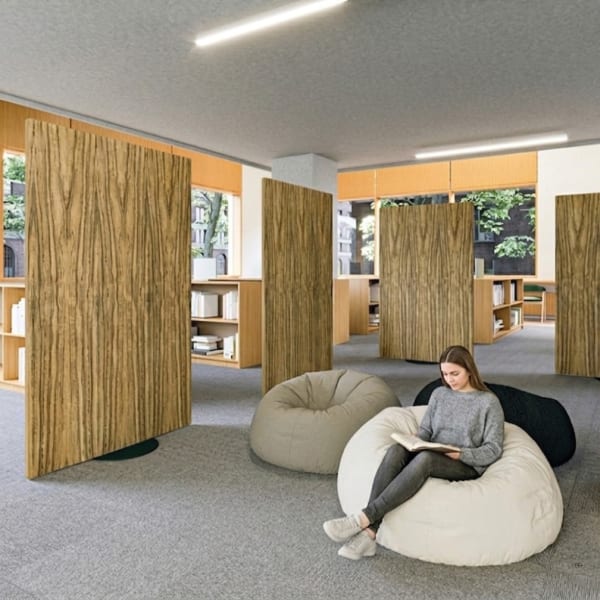
With mobile walls and freestanding screens, educators can subtly define the flow of the space across the day and week, from solo learning zones to shared and collaborative zones, without the need for permanent changes to the space.
We embrace texture and nature, utilizing tactile and biophilic forms to reinforce a sense of calm and belonging with soft finishes and nature-inspired tones. Additionally, our designs are available in varied heights and configurations to support adaptable teaching formats to encourage movement.
There’s no need for a full-scale renovation or a major budget overhaul to utilize shape psychology. Modular, mobile systems provide practicality; you can evolve or adapt any classroom with a few key pieces without the need for a costly retrofit.
Shape is a Performance Decision
While lighting, color, and attention restoration theory remain important, the psychology of shape is often overlooked - despite strong evidence of its impact in educational settings. It can positively influence focus and behavior, future-proof classrooms, and support a strong sense of inclusion and belonging.
While many think of shape as a decorative element, research shows that it can be wayfinding and transformational when utilized correctly. At func., we thoughtfully shape every modular and mobile system we create, translating the science of shape into a flexible learning environment that enhances educational outcomes for students and educators.
Explore how func brings the psychology of shape to life through its range of modular partition systems, acoustic screens, mobile walls and learning booths.